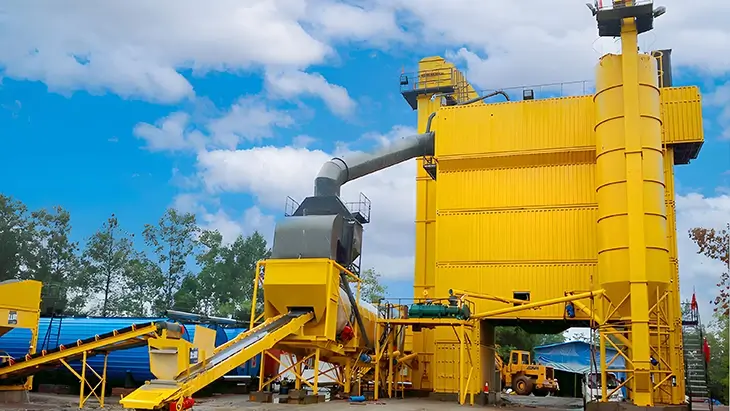
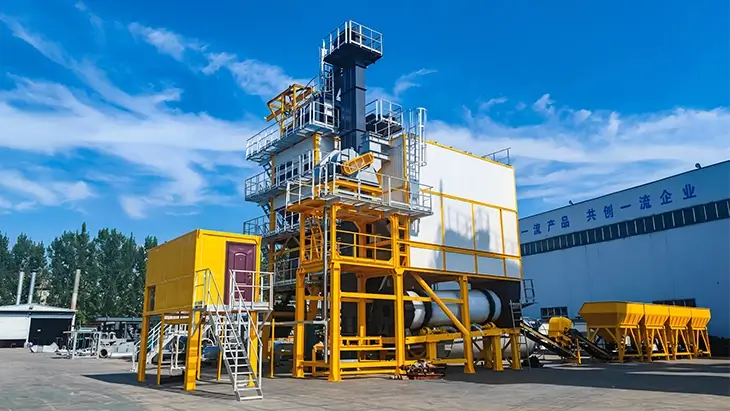
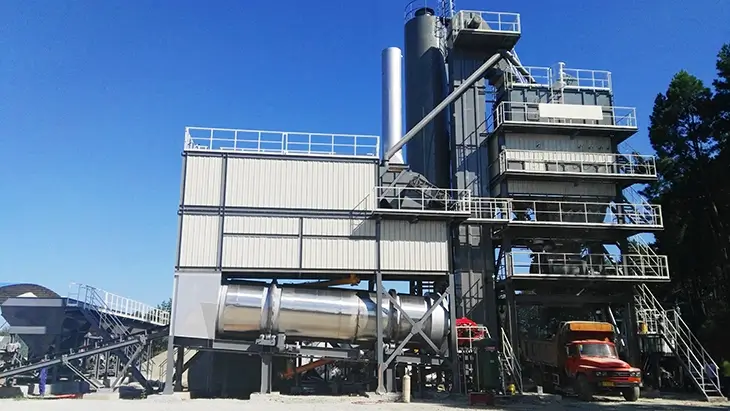
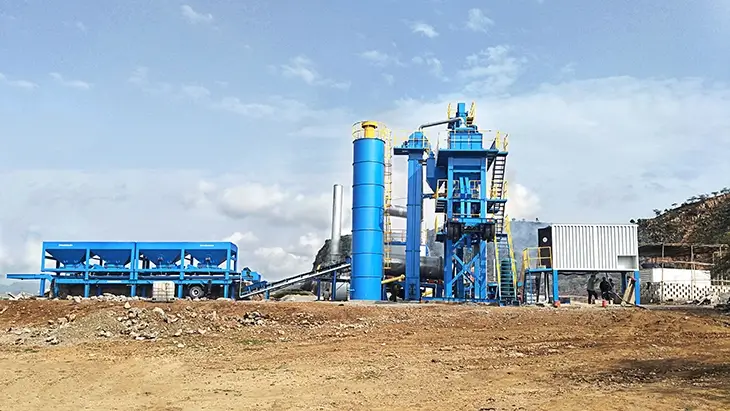

As a core piece of equipment in road construction, asphalt mixing plants directly impact project progress and pavement lifespan through their operational efficiency and product quality. However, in actual production, asphalt mixing plants commonly face problems such as frequent equipment failures, lack of transparency in the production process, and significant quality fluctuations. These problems exhibit significant differences across different regions: Europe has achieved a high level of quality control through preventative maintenance systems and green production technologies; North America has greatly improved production efficiency thanks to warm mix asphalt (WMA) technology (with a market share of nearly 40%) and intelligent control systems; while developing regions such as the Asia-Pacific and Africa are still constrained by technological backwardness, extensive management, and funding shortages, facing even more severe quality control challenges.
CONTENTS
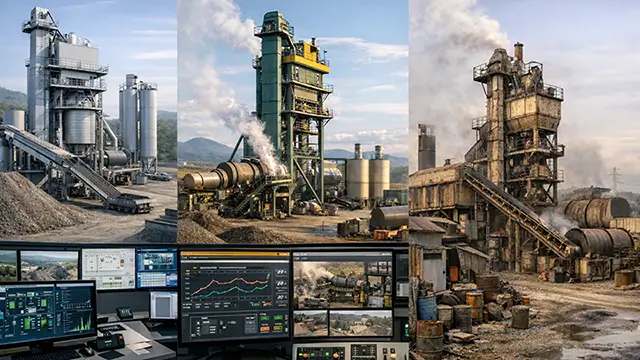
Equipment Maintenance Lags Behind, Leading To a High Failure Rate
1. Limitations Of Traditional Maintenance Methods
Equipment maintenance lag is a global challenge facing the asphalt mixing plant industry, but its severity varies significantly across different regions. According to a comparative analysis published by Fortune Business Insights and the International Energy Agency (IEA):
| Region | Mean Time Between Failures (MTBF) | Preventive maintenance coverage | Annual failure rate | Annual maintainence cost percentage |
|---|---|---|---|---|
| Europe | 800-1000 hours | 85% | 1.5% – 2% | 6% – 8% |
| North America | 700-900 hours | 78% | 5% – 8% | 7% – 9% |
| Asia Pacific | 500-700 hours | 65% | 10% – 12% | 10% – 12% |
| Middle East and Africa | 400-600 hours | 60% | More than 15% | 12% – 15% |
According to survey data from the China Construction Machinery Industry Association, the average failure rate of asphalt mixing equipment using traditional maintenance methods is between 10% and 12%, which is much higher than the less than 2% failure rate of intelligent equipment.
The lag in equipment maintenance is mainly manifested in 3 aspects:
- Delayed replacement of wear-resistant parts: When blade wear exceeds 1/3 of the design thickness or grooves deeper than 5mm appear on the liner, failure to replace them in time will not only lead to uneven mixing of the mixture and deviation in the output gradation, but also subject the mixing bearing to abnormal impact, exacerbating the wear of the reducer gears. A 2025 report by the China Construction Machinery Industry Association shows that equipment without preventative maintenance experiences 3-5 times more downtime than equipment with proper maintenance, increasing maintenance costs by nearly 100%. ACE Group’s BAP320 mixing plant, operating in the extreme environment of Dubai, achieves an annual failure rate of less than 0.3% through rigorous maintenance, while the industry average is as high as 8-12%.
- Disorderly maintenance of lubrication system: The equipment lubrication system is like the human blood circulation system, and it must strictly follow the “five fixed principles” (fixed location, fixed quality, fixed quantity, fixed time, and fixed person). Taking the hoist bearing as an example, if the standard of adding high-temperature lithium-based grease every 80 hours is not followed, the bearing surface will experience dry friction due to the rupture of the oil film, and the temperature will rise sharply, causing the raceway to anneal and deform.
- Lack of hazard investigation: Abnormal signals such as unusual noises and vibrations during equipment operation are actually early warnings of malfunctions. For example, periodic vibrations in the drying drum may indicate misalignment of the roller assembly axis; if not calibrated in time, this will accelerate roller wear. Air leakage from the dust collector’s pulse valve suggests diaphragm aging; if left unaddressed, this can lead to filter bag blockage and induced draft fan overload. Industry data shows that asphalt mixing plants that fail to implement preventative maintenance experience 3-5 times more downtime due to malfunctions compared to properly maintained equipment, and their repair costs nearly double.
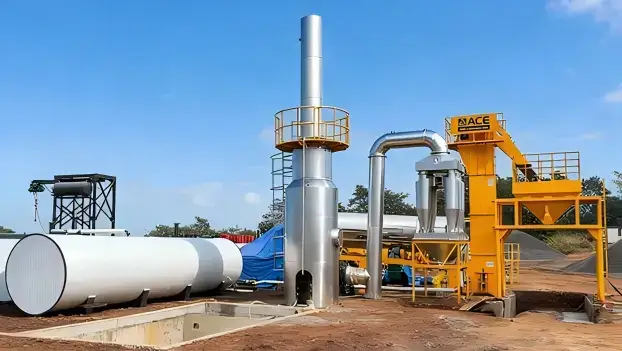
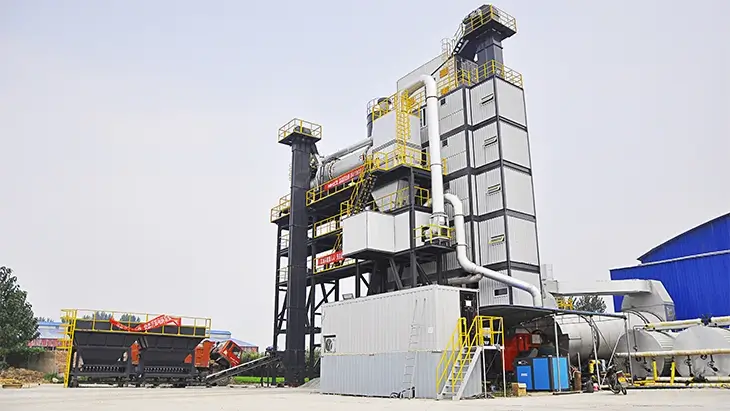
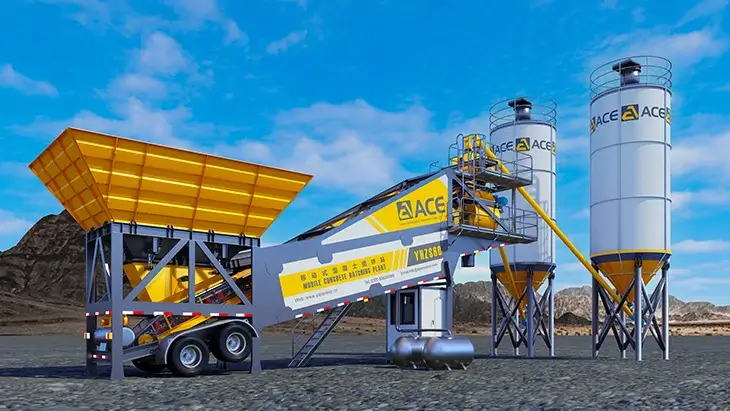
Model: BAP60 ~ BAP400
Capacity: 60t/h ~ 400t/h
Mixer Capacity: 750kg ~ 5000kg
Dust Emission: ≤20 mg/μm³
Total Power: 178kW ~ 960kW
Fuel Consumption Diesel: 5.5 ~ 7kg/t
Fuel Consumption Coal: 10kg/t
Measurement Accuracy: Aggregate: ±0.5%; Filler: ±0.25%; Bitumen: ±0.25%
2. Breakthrough In Predictive Maintenance Technology
By deploying IoT sensors and installing vibration, temperature, and speed sensors in key components such as motors, bearings, and belts, real-time equipment operation data is collected. For example, vibration spectrum analysis can predict bearing wear 3-5 days in advance, preventing sudden failures. After implementing the intelligent operation and maintenance platform, ACE Group has reduced equipment failure rates by 40%, lowered maintenance costs by 25%, and extended mean time between failures (MTBF) from 500 hours to over 800 hours.
Unstable temperature control affecting product quality
1. Differences In International Standards For Temperature Control Accuracy
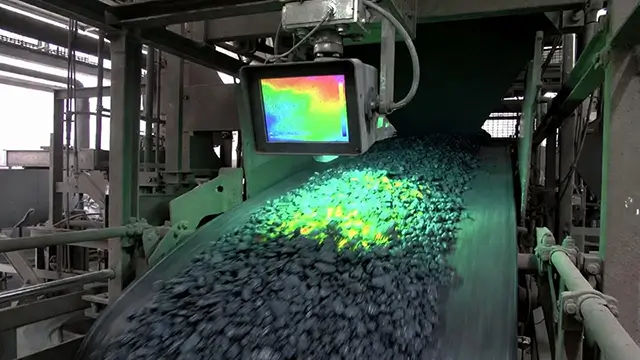
In the production of asphalt mixtures, temperature control is a core parameter determining product quality. The heating temperatures of asphalt, aggregates, mixing, storage, and discharge all require strict control. The heating temperatures of both asphalt and aggregates must strictly adhere to regulations. The heating temperature of asphalt is generally controlled between 150℃ and 170℃, while the heating temperature of aggregates should be 10℃ to 20℃ higher than that of asphalt.
Temperature deviation in asphalt mixture discharge is a global quality issue. The International Organization for Standardization (ISO) standard 15642 requires a temperature control accuracy of **±3℃**, but actual regional differences in production are significant.
- Advanced European equipment: ±2℃ (such as the Ammann UniBatch series)
- Mainstream equipment in North America: ±3-5℃
- Equipment for developing countries: ±8-10℃
2. Main Causes Of Temperature Fluctuations
Inaccurate bitumen heating temperature control: Unstable discharge temperature is another common issue directly affecting the final quality of asphalt concrete. Specifically, inaccurate control of the bitumen heating temperature may lead to the production of “burnt mix” or “white mix”. If the temperature is too high, the bitumen is easily “charred”, commonly known as “burnt mix” ; this material has no structural value and must be discarded. If the temperature is too low, the bitumen will fail to coat the aggregate uniformly, commonly known as “white mix” . According to industry statistics, the losses from “burnt mix” and “white mix” are staggering, with the cost of waste material generally around 250 RMB per ton.
Inaccurate aggregate heating temperature control: In addition, inaccurate control of gravel aggregate heating temperature can also lead to unstable discharge temperature. Improper burner flame size adjustment or damper malfunction can both result in ineffective temperature control. Periodic vibration of the drying drum, damper malfunction, changes in aggregate moisture content, and insufficient material in the cold hopper can all easily lead to waste.
Impact of aggregate moisture content: Excessive moisture content in aggregates can have multiple negative impacts on production. Firstly, during the drying process, every 1% increase in moisture content significantly increases fuel consumption, substantially raising production costs. Secondly, moisture forms a water film on the aggregate surface, hindering effective bonding between asphalt and aggregate. During high-temperature mixing, water vapor evaporation can also cause segregation in the asphalt mixture, resulting in uneven local strength of the pavement and shortening its service life.
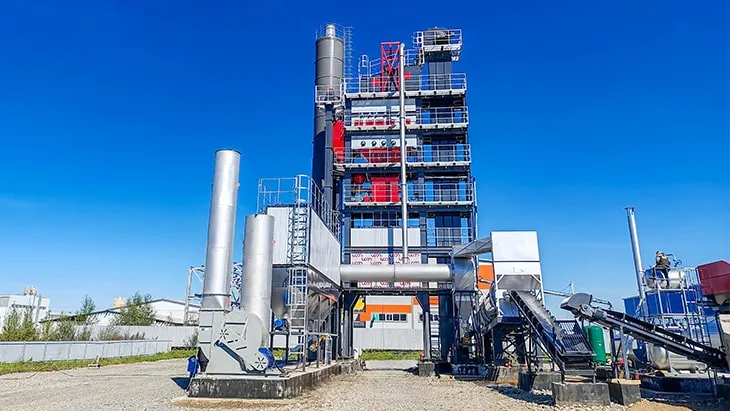
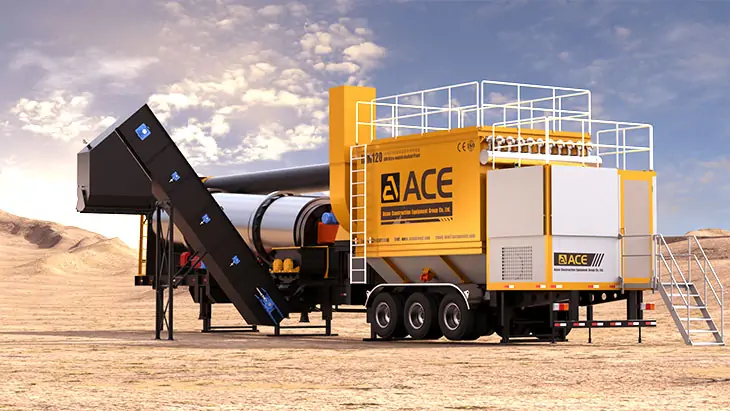
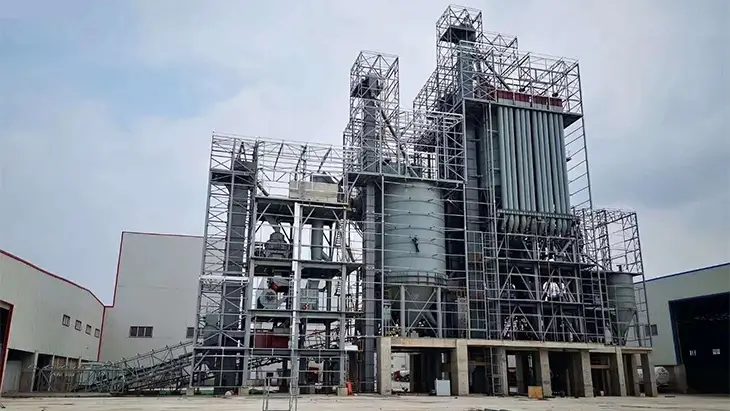
Model: CFB80 ~ CFB400
Capacity: 60t/h ~ 400t/h
Power: 245kW ~ 810kW
Cold Aggregate Feeders: 4×8m³ ~ 6×18m³
Drying Drum: 6000×1500mm ~ 11000×2700mm
Hot Aggregate Storage Bins: 12m³ ~ 70m³
Mixer Capacity: 1500kg ~ 5500kg
Bag-house Dust Collector Filtering Area: 400㎡ ~ 1132㎡
Filler Silo: 30m³ ~ 75m³
3. Advantages Of Intelligent Temperature Control Systems
After adopting the intelligent temperature control system, high-precision temperature sensors and an automated control system are deployed to monitor and dynamically adjust the aggregate drying, asphalt heating, and mixture discharge processes in real time. The control loop adopts a cascade control structure, with the main loop controlling the finished product temperature and the secondary loop controlling the heat transfer oil temperature. The control accuracy reaches ±2℃, the overshoot is less than 5%, and the response time is less than 30 seconds. The mixture gradation compliance rate has increased from 85% to over 98%, temperature uniformity has been significantly improved, segregation has been greatly reduced, and the waste rate has decreased from 3%-5% to below 1%, saving customers approximately 2-3 million RMB per year in raw material costs.
Inadequate Quality Control Of Raw Materials

1. Global Gap in Aggregate Quality Control
Aggregate gradation is a core factor determining the performance of asphalt mixtures. A 2024 study by the American Asphalt Association (APA) showed that gradation fluctuations exceeding ±3% can reduce pavement rutting resistance by 25-30%.
The challenges of aggregate quality control are particularly prominent in Africa. Due to the extensive management of quarries, the aggregate gradation compliance rate is only 65-70%, far lower than the level of over 90% in Europe and America. This quality gap directly leads to a significant reduction in the service life of pavements.
Europe’s stringent standards provide a benchmark for the world: the German DIN EN 12697 standard requires aggregates to undergo three levels of screening; the French NF P 18-540 standard has specific requirements for aggregate shape and angularity; and the British BS EN 13043 standard emphasizes the cleanliness and frost resistance of aggregates.
2. Economic And Environmental Values Of Moisture Content Control
1% increase in aggregate moisture content, fuel consumption during the drying process will rise by 6% . Data from the International Road Construction Technology Review (IRCT) shows that in humid regions of Southeast Asia, improper moisture content control leads to an annual fuel waste of over 500,000 cubic meters.
The infrared online moisture content monitoring system developed by the German company Wirtgen can improve moisture control accuracy to ±0.5%, saving 120,000-180,000 RMB in fuel costs annually. This technology is being promoted to the global market and is particularly suitable for high-humidity areas.
3. Intelligent Quality Control System
Precise proportion control: Integrating high-precision sensors and an automatic weighing system, it monitors raw material input in real time, controlling the error within ±0.5%, and automatically corrects and compensates to ensure that the mix proportion strictly conforms to the design specifications. The batching control employs loss-in-weight metering technology combined with a dynamic compensation algorithm, achieving aggregate metering accuracy of ±0.5%, powder metering accuracy of ±1.0%, and asphalt metering accuracy of ±0.3%, with the overall mix proportion accuracy controlled within ±2% .
Full-process data monitoring: A unique QR code is generated for each batch of mixture, linking it to production parameters, test reports, and construction sections, achieving full-chain traceability from raw materials to production to construction. After implementation on a certain highway project, the quality complaint rate decreased by 60% . A standardized laboratory testing mechanism was established, forming a closed-loop quality control system of “production-testing-feedback-optimization” through methods such as Marshall stability testing, aggregate gradation screening, and density and compaction testing.
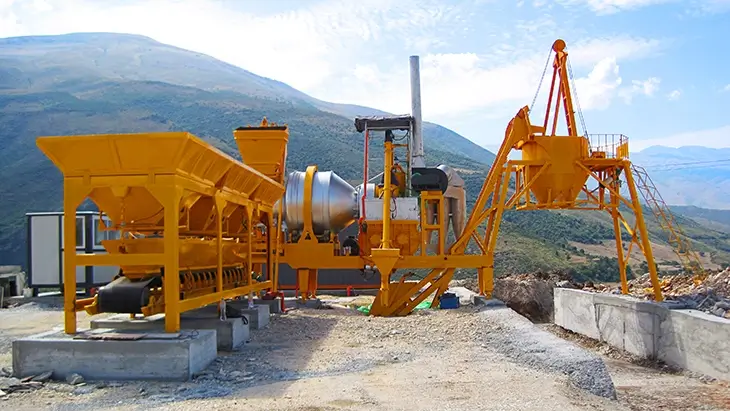
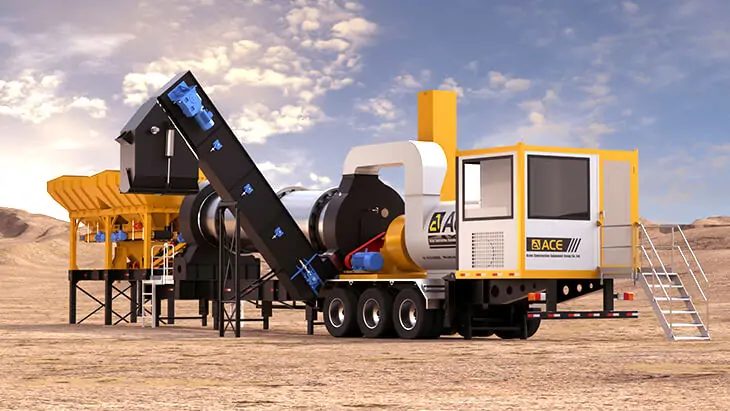
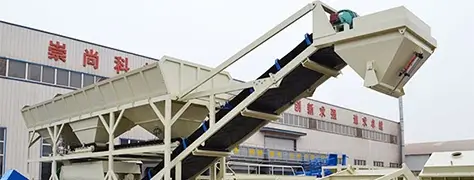
Model: IAM80 ~ IAM120
Capacity: 60t/h ~ 140t/h
Power: 127kW ~ 179.2kW
Weight: 55t ~ 56t
Cold Feeder Capacity: 4×9m³
Drying Drum Dimensions: Ø1500×7175mm ~ Ø1800×8360mm
Mixing Capacity: 100t/h ~ 140t/h
Bag Filter Filtration Area: 325m³ ~ 456m³
HMA Storage Silo: 1.55m³ ~ 1.57m³
Axles/Tires: 2/8+3/12 pcs
Conclusion
The three common challenges facing global asphalt plant production—inadequate equipment maintenance systems, unstable temperature control, and lax raw material quality control—are universal, but the extent to which they have been addressed varies significantly by region. Developed countries have achieved a high level of quality control through preventative maintenance, refined management, and intelligent control, while developing countries still need to make breakthroughs in equipment maintenance, raw material management, and process control.
The global asphalt mixing plant market is at a critical juncture of technological upgrading. Fortune Business Insights predicts that the market will continue to expand at a CAGR of 3.55% between 2025 and 2034, with the Asia-Pacific region becoming the fastest-growing area. In this process, technological innovation will be the core driving force: intelligent control systems, warm-mix asphalt technology, high-proportion recycled asphalt technology, and green and low-carbon production technologies are reshaping the industry landscape.
For countries pursuing high-quality road construction, investing in intelligent concrete mixing plant systems is no longer an option, but an essential path to enhance core competitiveness and adapt to the high-quality development of the industry. As the World Economic Forum's 2025 Infrastructure Report emphasizes, “The competition in road quality is essentially a competition in concrete mixing plant technology”. Only by controlling quality from the source of production can the optimization of the entire life cycle cost of roads be truly achieved.