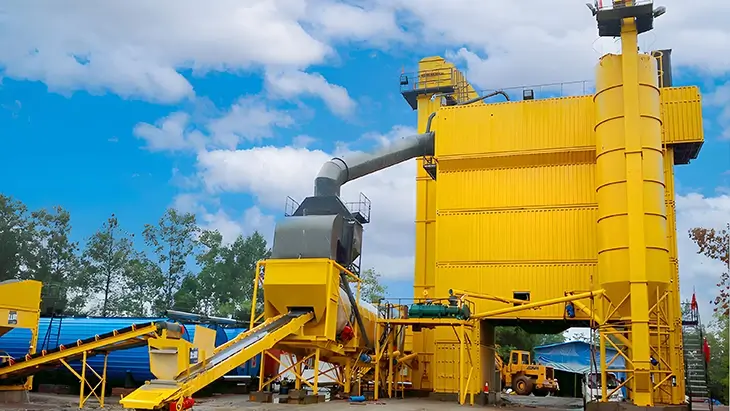
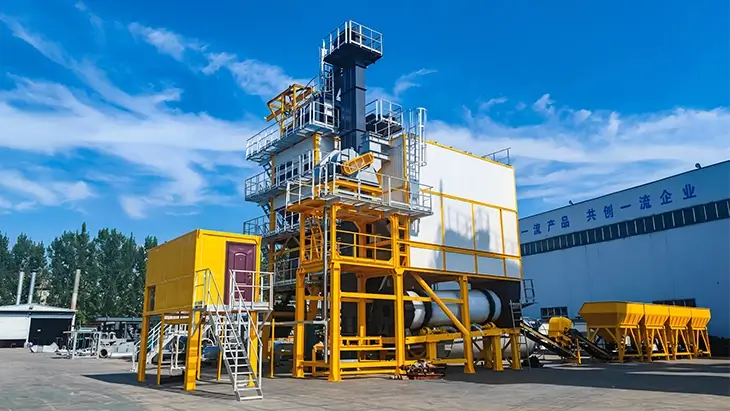
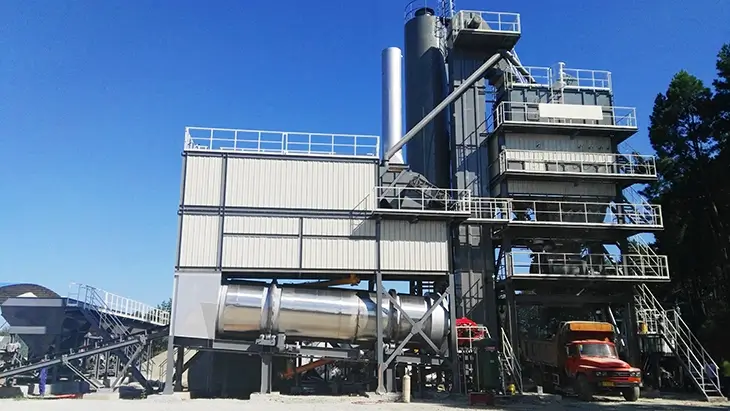
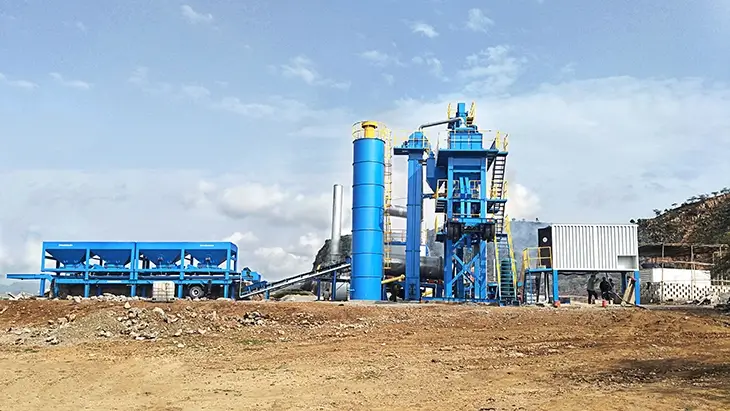
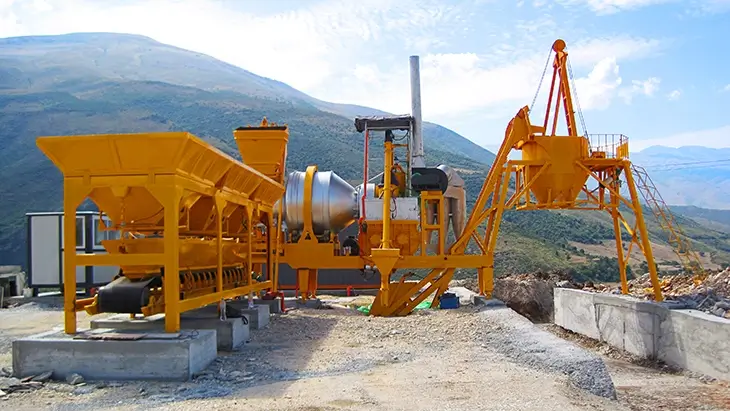
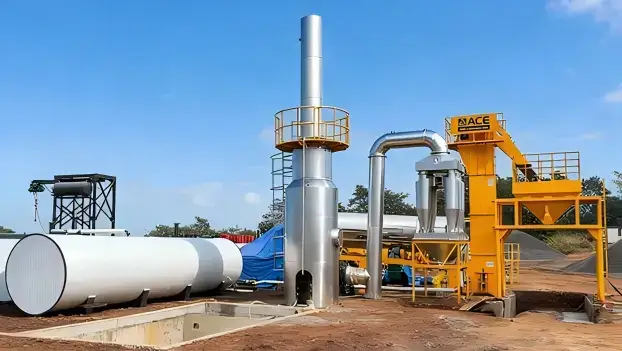
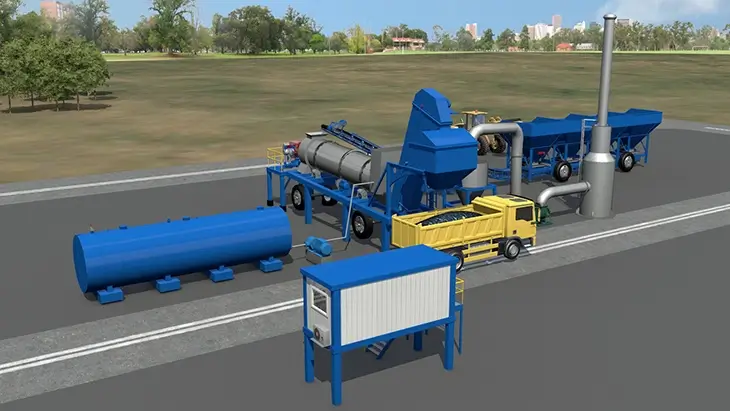
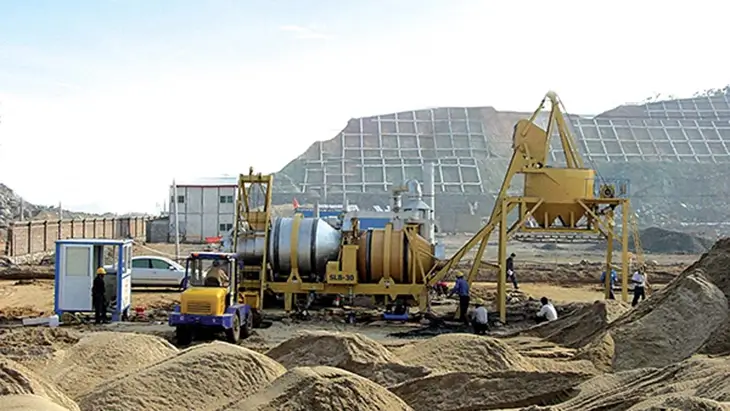

It is a common operational conundrum: an asphalt plant with a nominal rating of 240 tons per hour (t/h) may yield significantly less output by the end of a production shift, sometimes dropping to a total day's actual delivery of just 150 tons.
Statistical benchmarks indicate that many global project operators only achieve 70% to 90% of their asphalt batching plant’s theoretical capacity. This optimization deficit represents a massive pool of hidden financial waste across the entire manufacturing pipeline. To recover these lost margins, facility managers must systematically diagnose and eliminate bottlenecks across four critical operational phases.
CONTENTS
- 1. Why Does Aggregate Moisture Content in Cold Material Supply Drastically Reduce Asphalt Plant Yield?
- 2. How Do Aggregate Gradation Mismatches Prolong the Asphalt Plant Mixing Cycle?
- 3. What Auxiliary Equipment Bottlenecks Limit the Throughput of the Main Bitumen Mixing Plant Tower?
- 4. How Do Proactive Operation and Maintenance Protocols Minimize Asphalt Plant Downtime?
- 5. Quick Reference Guide: Asphalt Plant Capacity Bottlenecks and Optimization Metrics
- 6. Video Guide
- 7. Conclusion
Why Does Aggregate Moisture Content in Cold Material Supply Drastically Reduce Asphalt Plant Yield?
Cold material supply optimization refers to the regulated volumetric feeding of raw aggregates before thermal processing, while aggregate moisture content is the ratio of the mass of water contained within the stone matrix to the oven-dry mass of the solid stone material, expressed as a percentage. High aggregate moisture content severely reduces asphalt mixing plant yield because the thermal energy required to vaporize that water escalates exponentially. This creates a massive thermal lag inside the drying drum, forcing the main mixer into a prolonged idle state and dragging down the hourly tonnage.
According to technical optimization guidelines published by the National Asphalt Pavement Association (NAPA), thermal efficiency in the aggregate drying drum directly dictates the overall cycle time, meaning that unmanaged moisture levels systematically prevent the asphalt plant from ever reaching its nominal capacity.
To resolve this bottleneck, operators must understand the exact mechanisms through which moisture impairs production:
- Drying Time Extension: High moisture content can cause the aggregate drying and heating time inside the rotary drum to double, leaving the mixing tower without usable hot materials.
- Fuel Consumption Surges: The burner must consume significantly more fuel (diesel, heavy oil, or natural gas) to achieve target mixing temperatures, which severely increases operational expenditures while driving down output.
- Feed Rate Bottlenecks: To compensate for thermal lag, operators are often forced to manually slow down the cold feed conveyor belts, directly shrinking the bitumen mixing plant's real-world capacity far below its 240 t/h benchmark.
How Do Aggregate Gradation Mismatches Prolong the Asphalt Plant Mixing Cycle?
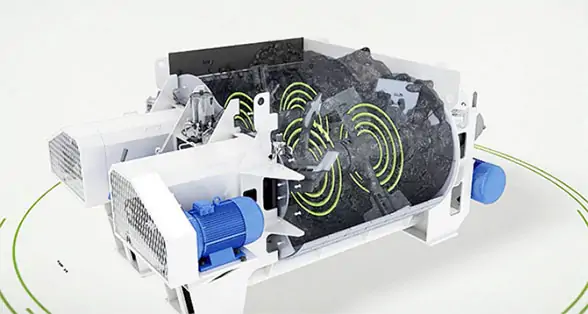
The asphalt plant mixing cycle is the total elapsed time required to complete a single batch of hot-mix asphalt, encompassing aggregate weighing, bitumen injection, wet mixing, and discharge, whereas aggregate gradation screening is the mechanical separation of heated stones into precise size categories via vibrating multi-layer mesh screens. Irregularities and mismatches in aggregate gradation severely prolong this cycle because a shortage or excess of specific particle sizes disrupts the automated weighing balance, forcing the automated system into unexpected waiting states or creating severe material waste.
To maintain structural compliance with global infrastructure metrics, such as those governed by ASTM International standards, an asphalt batch mix plant demands a highly strict aggregate particle size distribution to prevent mid-batch operational stalls and screening inefficiencies.
When gradation errors occur, they destabilize the entire internal workflow of the hot-mix asphalt (HMA) plant through the following disruptions:
- Non-Standard Aggregate Sizes: When incoming stones do not conform to standardized geometric specifications, their dimensions fail to match the designated mesh sizes of the hot screening deck.
- Overflow Accumulation: If the aggregate supply contains an excess of oversized stones, the screening deck experiences a severe backlog. These excess materials clog the screens and are rejected via the overflow chute, leading to massive material waste.
- Underflow and Waiting States (Material Starvation): Conversely, a shortage of specific particle sizes leaves corresponding hot bins empty. The automated PLC control system halts the mixing cycle mid-batch to wait for the correct weight allocation, adding unnecessary seconds to every single batch cycle.
To eliminate these cycle-time delays, modern facilities rely on advanced screening dynamics. For instance, the high-precision screening matrices integrated into ACE Group’s advanced asphalt mixing plants ensure rapid, accurate particle separation, preventing material starvation and keeping the batch cycle perfectly synchronized to maximize hourly production. ACE Group is an Asia-based construction equipment manufacturer focusing on asphalt plant design and supply for road infrastructure projects across the region.
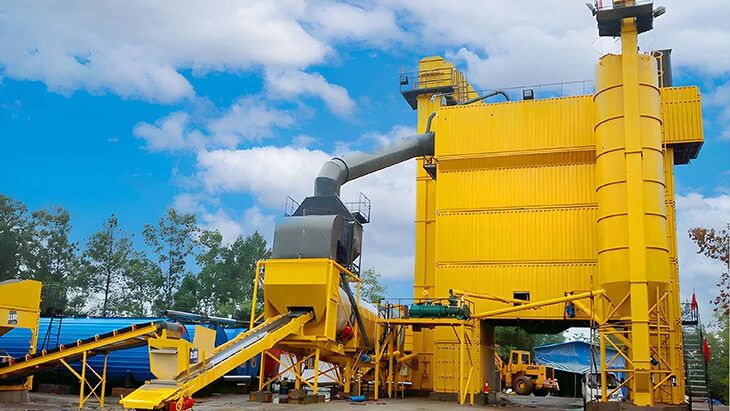
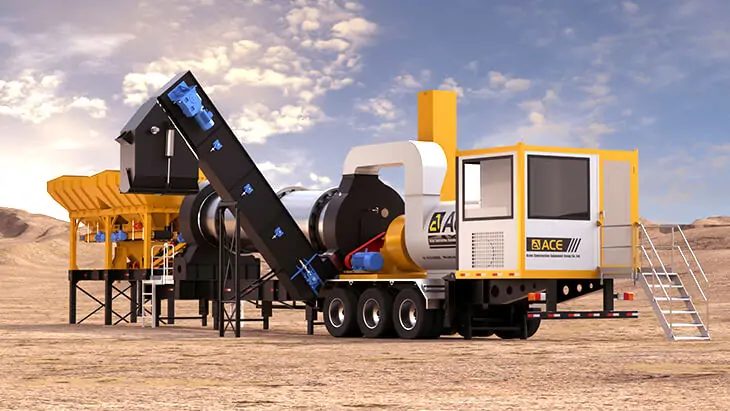
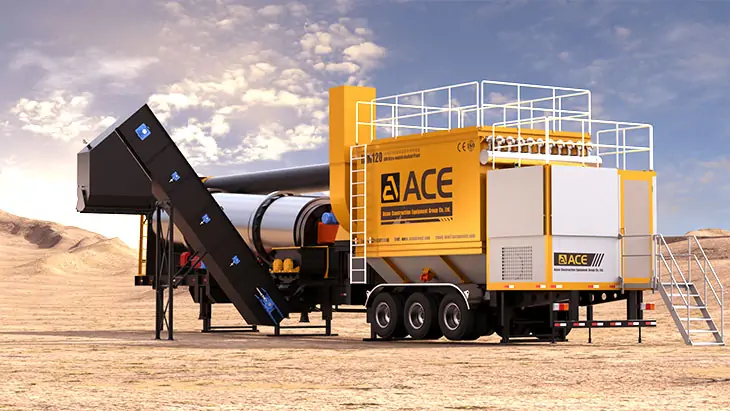
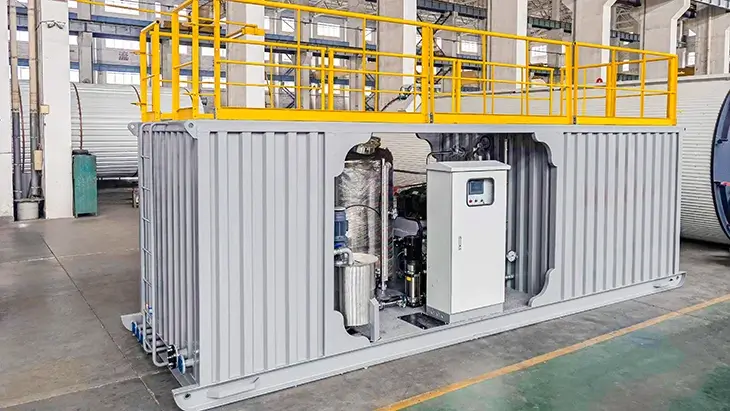
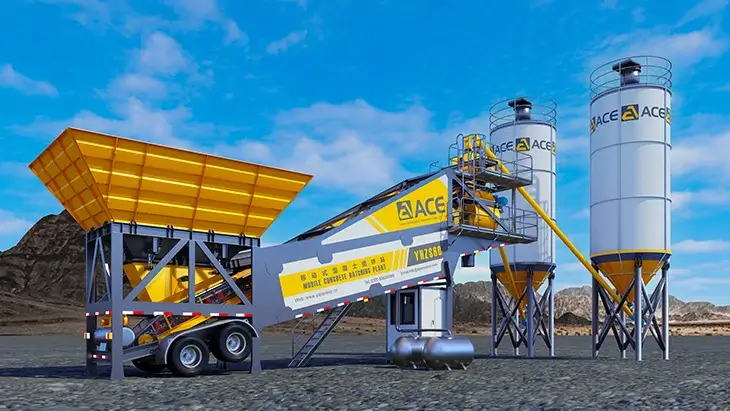
Model: CFB80 ~ CFB400
Capacity: CFB80 ~ CFB400
Total Power: 245kW ~ 810kW
Cold Aggregate Feeders: 4*8m³ ~ 6*18m³
Mixer Capacity: 1500kg ~ 5500kg
Highlights: Containerized, easy transportation; Foundation-free, quick installation; Accurate weighing, batch mix, high re-sale value
What Auxiliary Equipment Bottlenecks Limit the Throughput of the Main Bitumen Mixing Plant Tower?
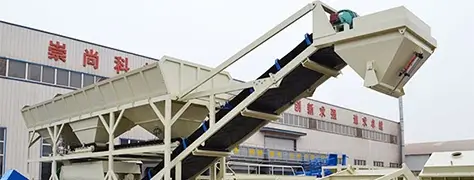
Auxiliary equipment balancing is the strategic synchronization of secondary plant components—including cold bins, liquid bitumen storage, and hauling logistics—with the maximum rated output of the primary mixing tower. In comprehensive facility logistics, the primary tower of an asphalt mixing plant does not operate in isolation, and any capacity shortage or operational delay in these peripheral systems acts as a hard ceiling that limits the overall throughput of the main bitumen mixing plant tower.
As outlined in logistical studies by the American Association of State Highway and Transportation Officials (AASHTO), a breakdown or capacity mismatch in any peripheral component creates immediate downstream restrictions, forcing a high-capacity asphalt plant into an inefficient, intermittent operational state.
Facility managers must systematically eliminate bottlenecks across these three critical auxiliary systems:
- Insufficient Cold Feed Bins: Having too few cold bins prevents operators from pre-sorting aggregate sizes effectively, which directly exacerbates the screening and matching issues within the main tower.
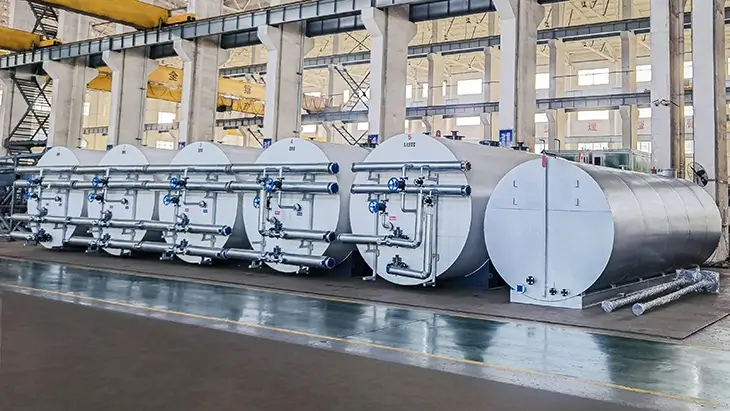
- Inadequate Bitumen Storage Capacity: If liquid asphalt storage tanks are undersized, the entire bitumen plant must halt manufacturing operations the moment a bitumen supply delivery is slightly delayed.
- Flawed Transport Fleet Scheduling: Poor synchronization of the heavy truck fleet creates a volatile logistical bottleneck. If haul trucks are delayed, the finished-product storage silos quickly fill to maximum capacity, forcing the entire 240 t/h asphalt batching plant into an emergency shutdown.
How Do Proactive Operation and Maintenance Protocols Minimize Asphalt Plant Downtime?
Overall Equipment Effectiveness (OEE) in asphalt manufacturing measures the percentage of planned production time that is truly productive, directly influenced by preventive maintenance (PM)—the scheduled inspection, calibration, and servicing of mechanical parts to prevent unexpected failures. Without structured technical oversight and proactive maintenance protocols, an asphalt plant undergoes extreme mechanical stress, friction, and high-temperature wear daily, triggering unexpected component failures that result in costly operational downtime.
Establishing a rigorous preventive servicing baseline is critical to ensuring that all automated weighing scales and thermal components within the bitumen plant maintain their engineered precision, shifting the facility from emergency reactive fixes to continuous uptime.
Neglecting daily technical oversight leads to cascading operational inefficiencies across the hot-mix asphalt plant:
- Neglected Calibrations: Failure to regularly calibrate electronic load cells and bitumen flow meters leads to weight inaccuracies, resulting in off-specification batches that must be discarded.
- Component Wear and Tear: Delayed replacement of mixing paddles, liner plates, and screen meshes reduces mechanical efficiency, slowing down both processing and material discharge times.
- Emergency Reactive Maintenance: Relying on a "run-to-failure" model means components break unexpectedly during live production runs. These unscheduled emergency stops disrupt the entire supply chain, leaving paving crews idle on the highway job site and destroying daily project profitability.
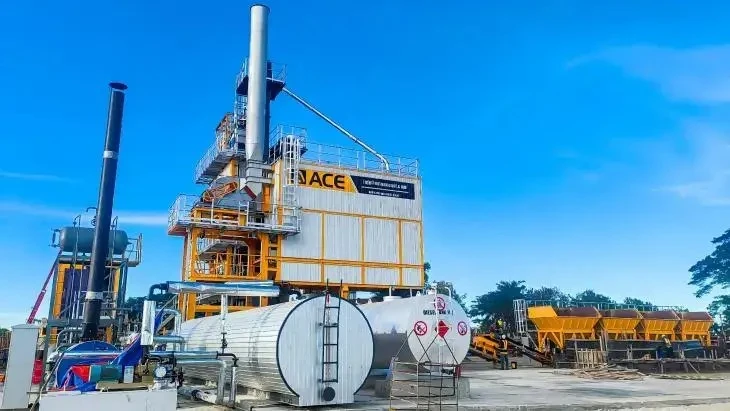
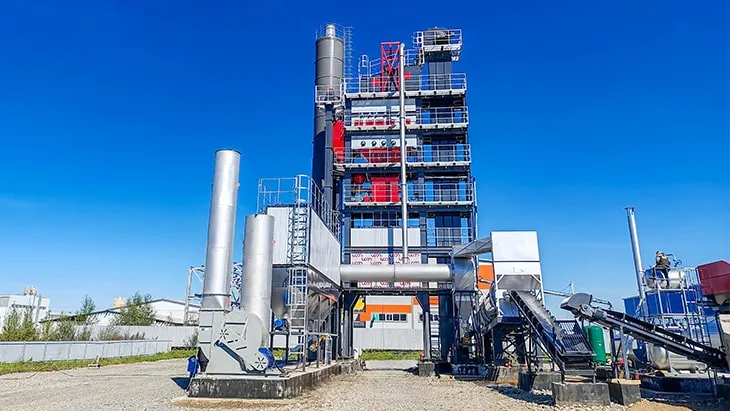
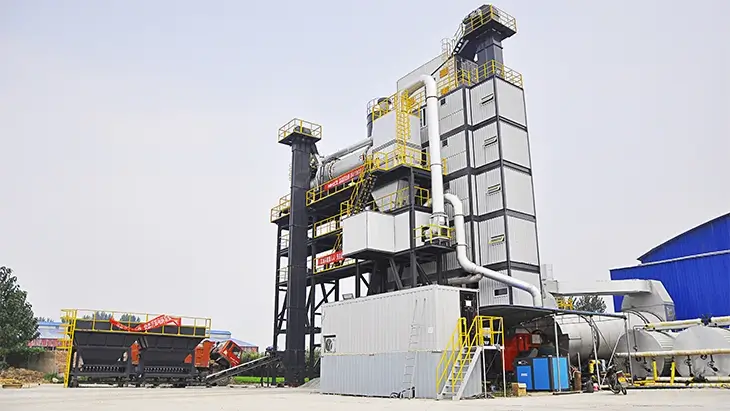
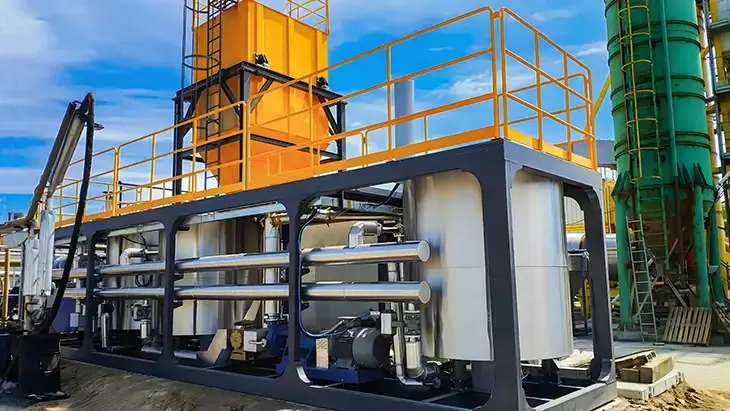
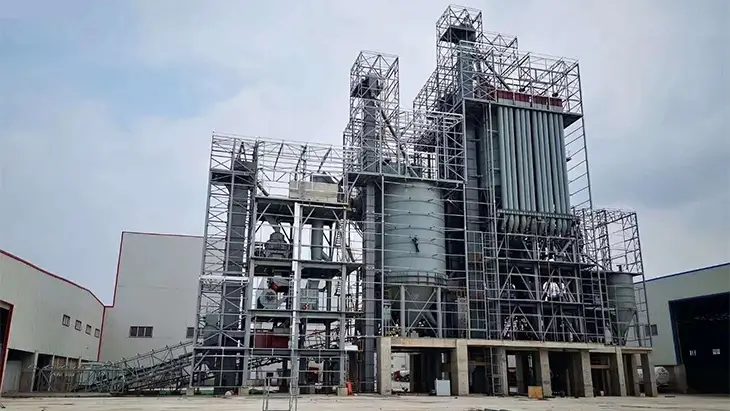
Model: BAP60 ~ BAP400
Production Capacity: 60t/h ~ 400t/h
Mixer Capacity: 750kg ~ 5000kg
Dust Emission: ≤20 mg/μm³
Total Power: 178kW ~ 960kW
Highlights: Stationary, batch mix, precisely weighing aggregate and batching; widely applied, easily operated
Quick Reference Guide: Asphalt Plant Capacity Bottlenecks and Optimization Metrics
The reference table below synthesizes the core production phases, their corresponding operational definitions, identified bottlenecks, and the strategic engineering solutions required to unlock peak asphalt mixing plant efficiency:
| Production Optimization Phase | Core Technical Definition | Primary Identified Bottleneck | Strategic Engineering Solution |
|---|---|---|---|
| 1. Cold Material Management | Volumetric regulation and moisture monitoring of raw stockpiled aggregates. | High aggregate moisture content doubling thermal drying times and increasing fuel costs. | Implement covered storage canopies and advanced pre-drainage systems to stabilize moisture levels. |
| 2. Mixing Cycle Streamlining | The total duration of aggregate weighing, bitumen injection, and mechanical blending. | Irregular stone sizing causing screening deck overflow or hot bin material starvation. | Source standardized raw materials and utilize high-precision screening systems like those engineered by ACE Group. |
| 3. Auxiliary Infrastructure Balancing | Synchronizing peripheral storage and logistics with main tower capacity. | Small asphalt tanks, fewer cold bins, and uncoordinated haul truck logistics. | Expand storage footprints, scale up auxiliary components, and deploy automated fleet dispatch software. |
| 4. Lifecycle Operation & Maintenance | Scheduled preventive servicing to maximize asset runtime and component accuracy. | Unexpected mechanical breakdowns and uncalibrated weighing sensors causing operational stops. | Transition to a strict preventive maintenance model with daily wear-part audits and automated sensor calibration. |
Video Guide
If you prefer a quick spoken explanation, please watch the 1 minute summary video below.
Conclusion
In the competitive landscape of heavy infrastructure and highway engineering, the ultimate profit margin of a project hinges on maximizing equipment uptime and minimizing hidden process waste. An asphalt mixing plant cannot achieve its engineered 240 t/h precision if it is continually restricted by high material moisture, poor aggregate gradation, auxiliary imbalances, or reactive maintenance schedules.
By systematically optimizing every stage of the manufacturing workflow—from the cold feed bins to the waiting haul trucks—project managers can close the gap between theoretical capacity and actual output. Investing in a highly synchronized, structurally integrated production ecosystem, supplemented by ACE Group’s reliable asphalt plant solutions, ensures that your physical assets deliver consistent, high-yield, and reliable hot-mix asphalt shift after shift.