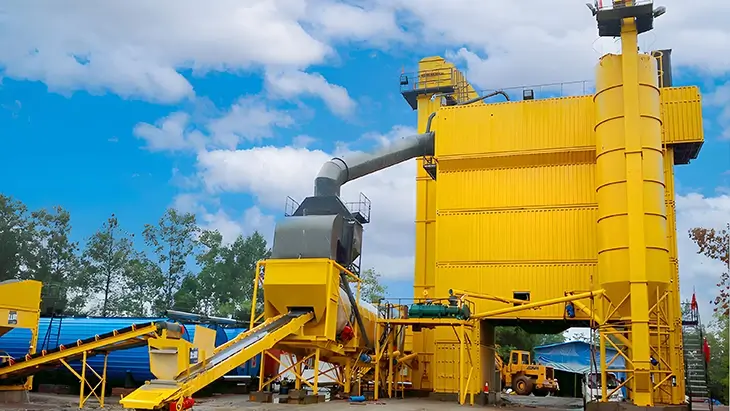
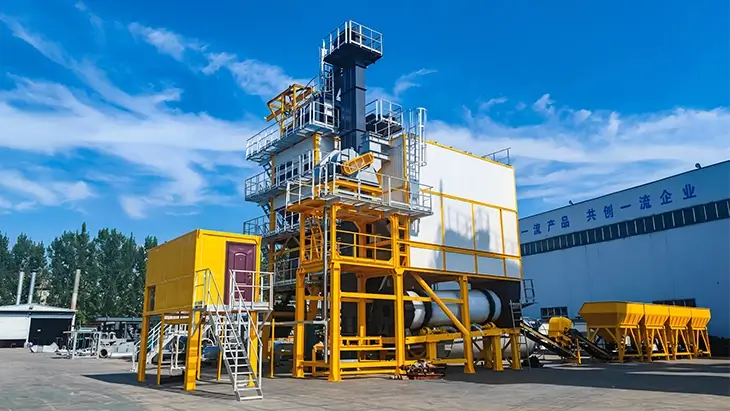
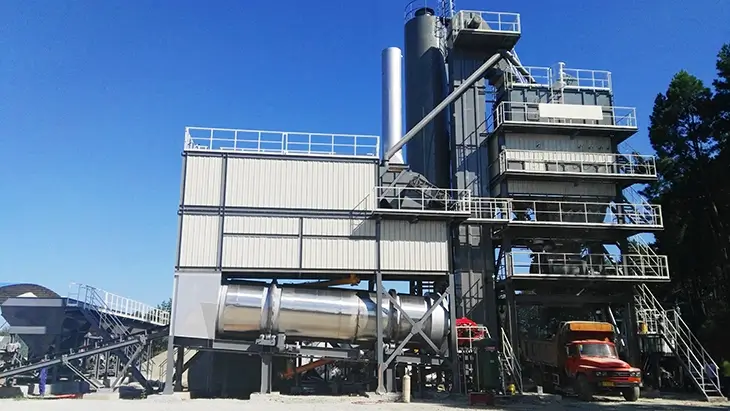
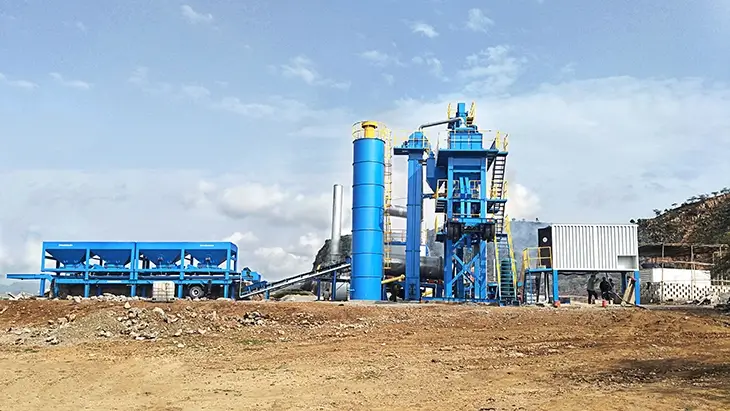
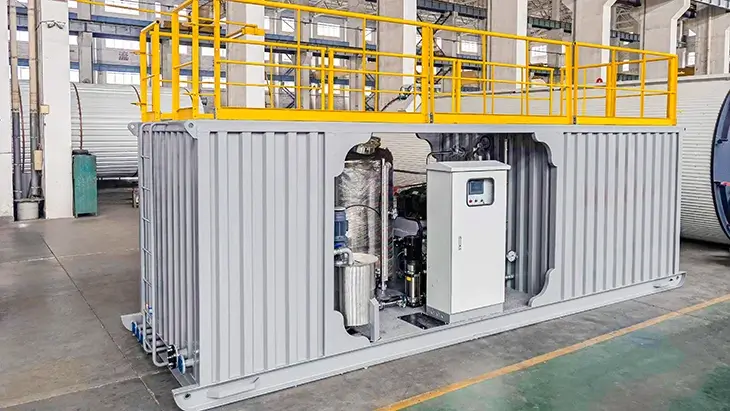
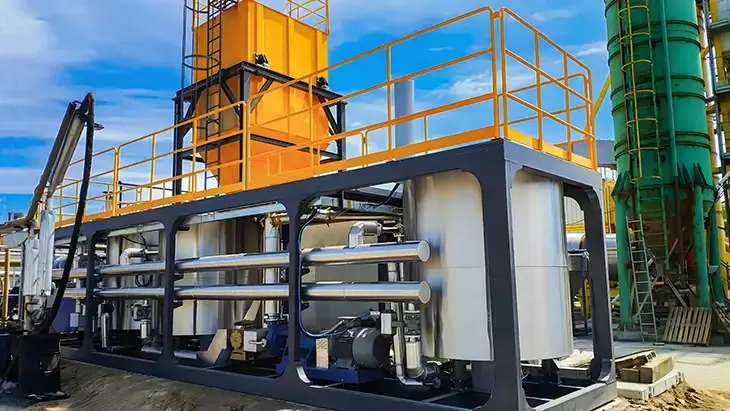
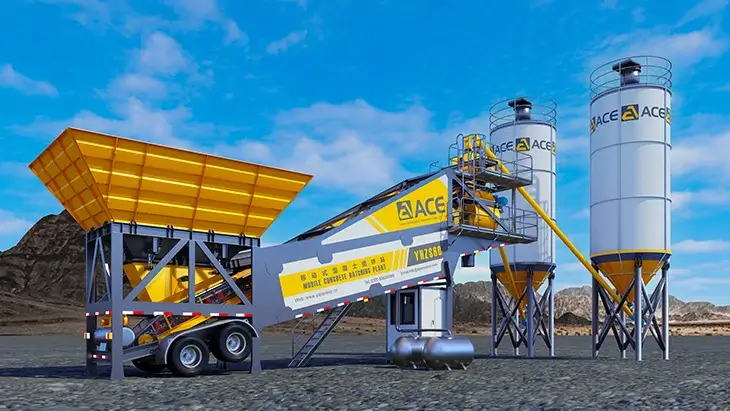
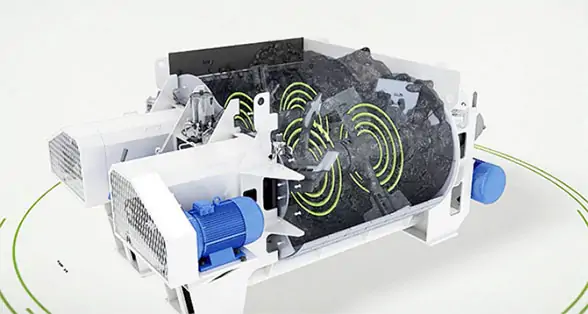
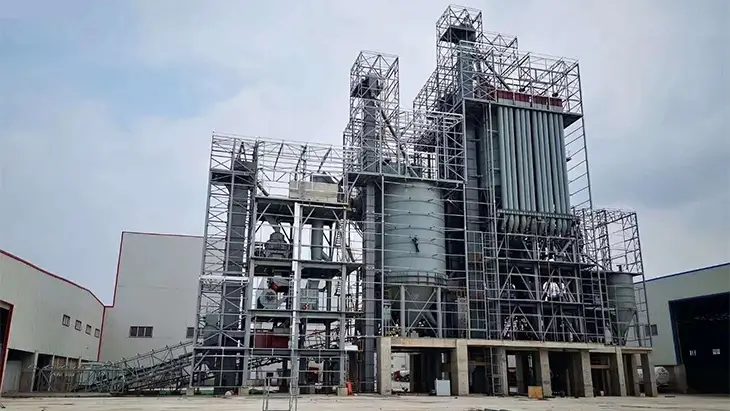

Polymer modified bitumen plant, PMB plant for short, is a specialized, integrated system designed to produce polymer modified bitumen, a high-performance material essential for modern road construction, paving, and roofing. Beyond highways, PMB is critical for infrastructure projects requiring high durability, such as bridge deck waterproofing, tunnel linings, and parking structures.
CONTENTS
- 1. Classification of Polymer Modified Bitumen Plants
- 2. Composition and Component Function of Polymer Modified Bitumen Plants
- 3. How does A Polymer Modified Bitumen Plant Work?
- 4. What is Polymer Modified Bitumen (PMB)?
- 5. A Premier Global Supplier of Polymer Modified Bitumen Equipment
- 6. Key Considerations for Purchasing a PMB Plant
- 7. Frequently Asked Questions about PMB Plants
- 8. Key Takeaways
Classification of Polymer Modified Bitumen Plants
Polymer Modified Bitumen (PMB) plants are generally categorized by modifier compatibility, production methodology, modular configuration, and output capacity.
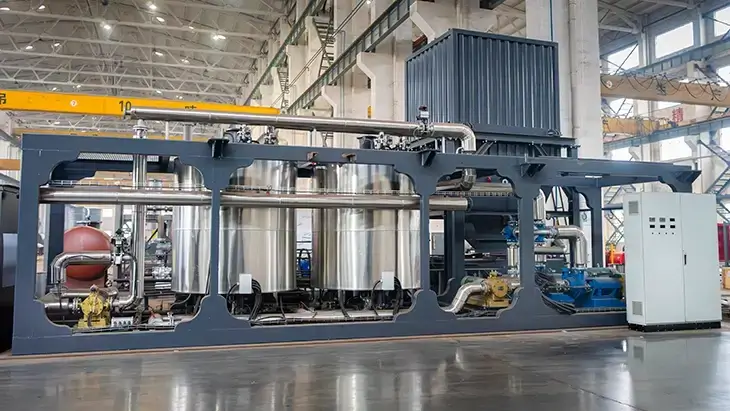
Model: GS10
Capacity: 10 t/h
Mixing Tank Capacity: 5 m³
Colloidal Mill Feed Pump Capacity: 10 m³/h
Number of Colloidal Mills: 1
Production Mode: Batch
Polymer Feeding Method: Manual Feeding
Operation Mode: Computer Operation, Semi-automatic
Installed Power: 160 kW
Number of Containers: 40HQ*1+20GP*1
Classified by Modifier Compatibility
PMB manufacturing plants are engineered to handle specific chemical profiles. Some are purpose-built for thermoplastic elastomers, featuring high-shear systems specifically designed for SBS (Styrene-Butadiene-Styrene) modification. Other units are optimized for blending plastomers or rubber-based modifiers, such as SBR (Styrene-Butadiene Rubber), EVA (Ethylene-Vinyl Acetate), or PE (Polyethylene), which may require different shearing intensities or digestion times.
Classified by Production Methodology
The operational flow of PMB plants typically falls into two primary categories:
- Batch Type (Intermittent): Precise for high-spec projects, allowing for exact weighing and multi-stage shearing of individual batches.
- Continuous Type: Designed for high-volume efficiency, where bitumen and modifiers are metered and processed in a single, uninterrupted flow.
Classified by Configuration & Automation
PMB plants are further distinguished by their functional modularity and level of automation. The spectrum of plant capabilities, from basic/manual models to high-end, fully automated systems with real-time quality monitoring and remote diagnostics, is determined by the sophistication of core components such as the high-shear mill, PLC control systems, and automatic dosing units.
Classified by Production Capacity
PMB plants currently available on the market exhibit a wide range of capacities, spanning from 4 t/h to 40 t/h. Based on these varying capacities, asphalt modified plants can be roughly tiered as:
- Small-scale: 4–10 t/h (ideal for localized maintenance or trial sections).
- Medium-scale: 15–25 t/h (the industry standard for major highway projects).
- Large-scale: 30–40 t/h and above (optimized for massive infrastructure hubs).
There are numerous manufacturers of modified bitumen plant on the global market. PMB plants manufactured by different brands or in different regions may vary in terms of design concept, technical features, and after-sales service.
Composition and Component Function of Polymer Modified Bitumen Plants
Polymer modified bitumen plant mainly consists of the following functional components:
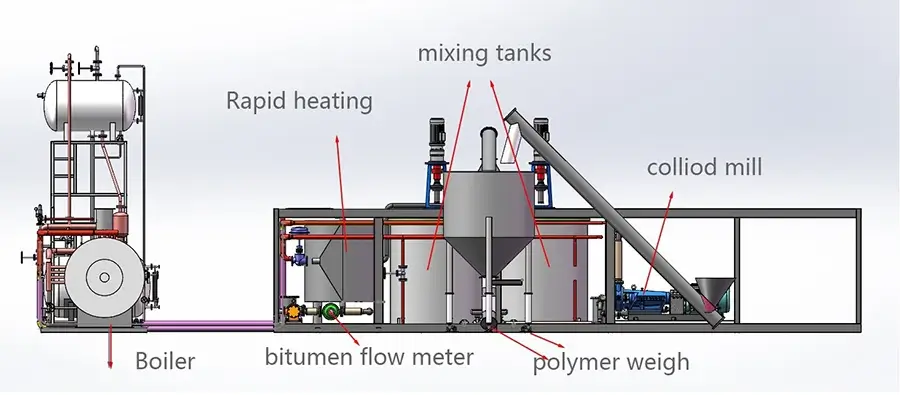
1. Raw Material Storage and Conveying System
Bitumen Tank: Used to store unmodified base bitumen, and usually equipped with heating device to keep bitumen in a suitable flowing state.
Modifier Tank: Used to store polymer particles, filler or other modifier materials, and possibly equipped with heating or thermal insulation facilities.
Delivery Pump: Used to deliver bitumen and modifier from tank to subsequent processing unit to ensure stable supply of materials.
2. Metering System
Bitumen Metering Unit: Used to accurately control the flow of base bitumen to ensure that bitumen is added in proportion to the recipe.
Modifier Metering Device: Used to quantitatively feed modifier to ensure dosage accuracy.
3. Premix and Swelling System
Swelling Tank: Used to pre-mix and swell modifier with a small quantity of bitumen at a certain temperature to enhance the compatibility between modifier and bitumen.
Agitator: Used to stir materials in the swelling tank to facilitate the uniform blending of modifier and bitumen.
4. Main Mixing and Shear Dispersion System
Colloidal Mill: Used to provide high-strength shearing force that further refines swollen modifier particles and uniformly disperses them in the base bitumen, forming a stable modified bitumen emulsion.
High-speed Agitator:: Used to generate shear forces that facilitate the dispersion of modifiers, serving as the substitute or assistance of colloid mill in some plants.
5. Temperature Control System
Heater: Used to preheat bitumen and modifier to ensure that the mixing process is carried out at an appropriate temperature to advance the dissolution and dispersion of the modifier.
Cooling System: Used to cool down modified bitumen to the temperature required for storage and transportation after mixing.
6. Control System
Control Unit: The integrated automatic control system, including PLC, touch screen or computer control system, is used to set process parameters, monitor operation status, record production data and execute fault alarm.
7. Auxiliary Equipment and Facilities
Filtering Device: Used to remove particles or impurities that are not completely dispersed in modified bitumen and improve product quality.
Pipes and Valves: Used to connect all processing units to realize the directional flow and flow adjustment of materials.
Safety Protection Devices: including pressure relief valves, emergency cut-off devices and fire prevention facilities, etc., used to ensure the operation safety of PMB manufacturing plants.
Lubrication and Sealing System: Used to lubricate moving parts of the plant to prevent leakage and ensure the long-term stable operation.
How does A Polymer Modified Bitumen Plant Work?
Step 1: Heat the bitumen in the bitumen supply tank to 170°C -180°C. Calculate the bags of pre-weighed polymer according to the production specifications and place them near the screw feeder.
Step 2: Pump bitumen from the supply tank to the weighing tank and the mixing tank by the charging pump based on the required batch weight. The polymer metering system will be started after the smallest batch is delivered to the weighing tank. Then he operator loads bags into the designated hopper and confirms the loading of all polymers according to specifications and batches by pressing buttons.
Step 3: If the operator does not fully load polymers, the Programmable Logic Controller (PLC) will halt the loading operation of the charging pump and await confirmation of polymers loading. After confirming the precise quantity of polymers, the PLC will automatically incorporate the tank weight into the total weight of bitumen and polymers. To improve the dispersion of polymers in bitumen using a high-speed shear mill, the polymer-bitumen blend must be immediately pumped to the shear mill.
Step 4: Once all polymers and bitumen are loaded into the tank, the PLC initiates the transfer of polymers and bitumen to the Polymer-Modified Bitumen (PMB) supply tank via the shear mill feed pump and high-speed shear mill.
Step 5: Under the monitoring of PLC, the feed pump of shear mill pumps out polymer bitumen mixture, and the charging pump will load materials into other tanks of the next batch. These steps automatically repeat until the production process of modified bitumen ends.
Model: GS20S
Capacity: 20 t/h
Mixing Tank Capacity: 5 m³
Colloidal Mill Feed Pump Capacity: 20 m³/h
Number of Colloidal Mills: 2
Production Mode: Continuous
Polymer Feeding Method: Automatic, Subtractive Metering
Operation Mode: Computer Operation, Fully Automatic
Installed Power: 250 kW
Number of Containers: 40HQ*3+20GP*1
What is Polymer Modified Bitumen (PMB)?
Polymer modified bitumen(PMB) is a bitumen-based mixture improved by adding modifiers such as rubber, resin, polymer, finely ground rubber powder, or by employing mild oxidation processing to enhance its properties.
Compared to traditional bitumen, its advantages primarily lie in enhanced temperature resistance, fatigue resistance, adhesion, and elasticity. Various types of PMB manufacturing plants are appropriate for diverse production scenarios. Large-scale production lines are suitable for mass production applications such as highway and urban road infrastructure construction, whereas small-scale testing plants are more appropriate for research and development as well as small-batch production, such as new material development and product performance testing. In addition, these asphalt modified plants are also extensively utilized in a variety of other engineering fields.
A Premier Global Supplier of Polymer Modified Bitumen Equipment
ACE Group from China, distinguished among renowned manufacturers domestically and internationally, possess extensive experience and technical expertise in the research and development, production, and sales of PMB manufacturing plants. GS series multifunctional modified bitumen plants manufactured by ACE Group, featured compact structure, strong adaptability, high weighing accuracy, homogeneous modified bitumen, high production efficiency and low energy cost, produce SBS, EVA, PE and other polymer modified bitumen.
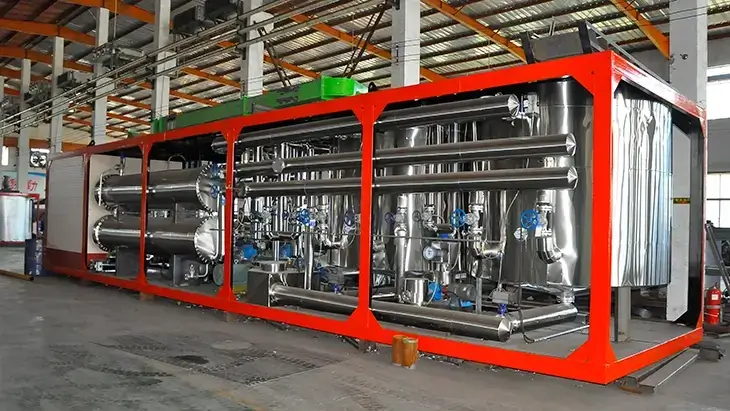
Model: GS20ZS
Capacity: 20 t/h
Mixing Tank Capacity: 5 m³
Colloidal Mill Feed Pump Capacity: 20 m³/h
Number of Colloidal Mills: 2
Production Mode: Continuous
Polymer Feeding Method: Automatic, Subtractive Metering
Operation Mode: Computer Operation, Fully Automatic
Installed Power: 300 kW
Number of Containers: 40HQ*4
Key Considerations for Purchasing a PMB Plant
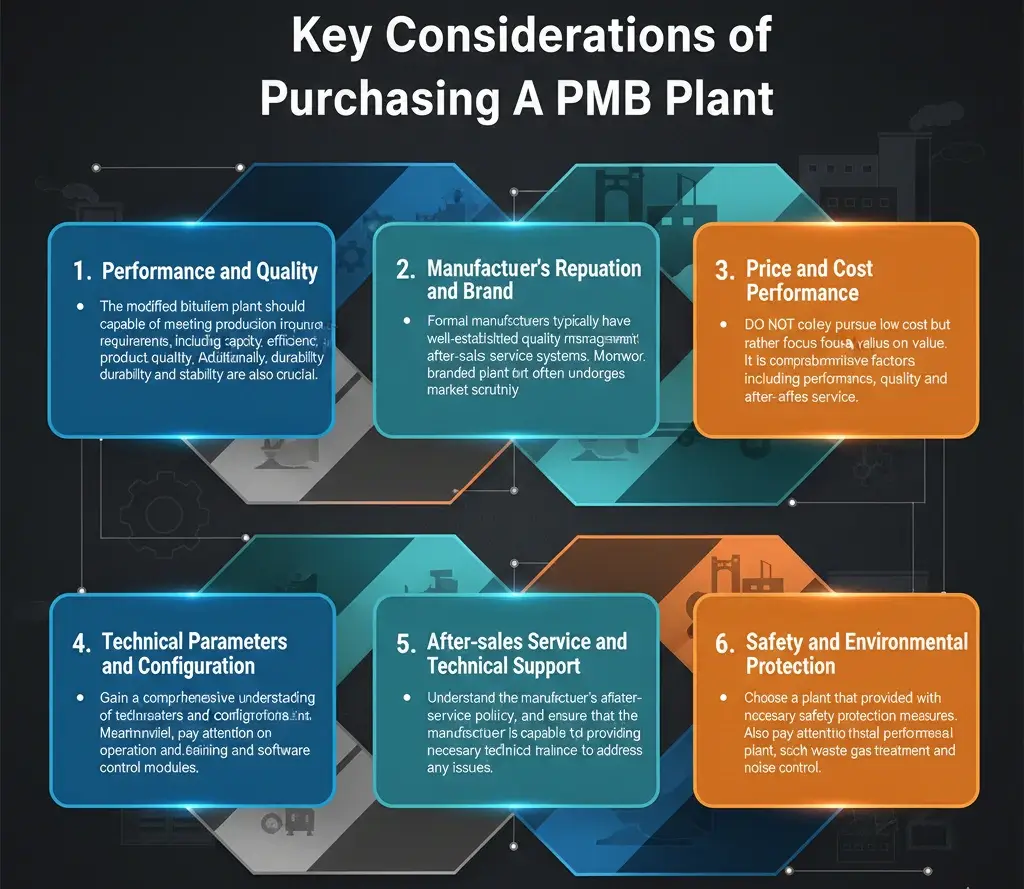
1. Performance and Quality
The asphalt modified plant should be capable of meeting production requirements, including capacity, efficiency and product quality. Additionally, durability and stability are also crucial, which ensures prolonged continuous operation without malfunction.
2. Manufacturer's Reputation and Brand
Choose formal and reputable manufacturer and brand. Formal manufacturers typically have well-established quality management and after-sales service systems, ensuring the provision of reliable products and technical support. Moreover, branded plant often undergoes market scrutiny, ensuring enhanced performance and quality assurance.
3. Price and Cost Performance
When considering pricing, DO NOT solely pursue low cost but rather focus on value for money. It is essential to comprehensively consider factors including performance, quality and after-sales service when selecting a plant that best fits within your budget and meets specific requirements.
4. Technical Parameters and Configuration
Gain a comprehensive understanding of technical parameters and configurations of the plant such as the heating system, agitation system and conveying system, to ensure that the plant reaches the required production processes. Meanwhile, pay attention to the operation and software control modules of the PMB manufacturing plant, as those pertain to both work efficiency and labor costs.
5. After-sales Service and Technical Support
Understand the manufacturer's after-sales service policy, including warranty period and maintenance response time. Ensure that the manufacturer is capable of providing necessary technical training and guidance to promptly address any issues encountered during usage.
6. Safety and Environmental Protection
Choose a plant that meets relevant safety standards and is provided with necessary safety protection measures. Also pay attention to the environmental performance of the plant, such as waste gas treatment and noise control, to ensure minimal environmental impact during the production process.
Frequently Asked Questions about PMB Plants
Q1: How can we resolve inconsistent PMB quality and batch variations when using the same formula?
A1: The root cause of instability usually lies in process control, not the formula itself. Common issues include improper shearing parameters (temperature, speed, or duration), which prevent uniform polymer dispersion. Inconsistent feeding sequences or speeds can lead to clumping or thermal degradation. To address this, create a Standard Operating Procedure (SOP) that enforces precise control at each stage.
From a technical standpoint, implementing an online viscosity monitoring system for real-time quality tracking is recommended. Regular maintenance of critical components, such as the stator and rotor in the high-shear mill, is essential to maintain efficiency. By standardizing processes proactively, you ensure batch-to-batch consistency.
Q2: High-end PMB equipment requires a large capital investment. How do we justify its long-term value and ROI to stakeholders?
A2: Shift the focus from "purchase price" to "Total Cost of Ownership" (TCO). High-end equipment adds value through precision and automation, reducing energy consumption and material waste per unit. While the initial investment is higher, superior reliability minimizes downtime and maintenance costs, while high pass rates eliminate the risk of costly quality claims or rework.
Present a 3-5 year ROI model that quantifies gains in four areas: energy efficiency, material savings, quality assurance, and labor reduction. By demonstrating that the equipment pays for itself through operational savings and enhanced market competitiveness, the high-end choice becomes the most financially sound decision for long-term projects.
Q3: Global market demands vary significantly. How should PMB plants be configured for different regions?
A3: Success in global markets requires a flexible strategy: "Standardized Core Modules, Customized Peripheral Configurations." For mature markets like Europe and North America, focus on high automation, stringent environmental compliance (e.g., emission controls), and remote smart diagnostics. In contrast, for emerging markets and Belt and Road projects, prioritize cost-effectiveness, ease of operation, and simplified maintenance, with robust localized training.
Environmental adaptability is also critical. For regions with extreme climates, such as the Middle East or Africa, equipment should be reinforced with high-temperature resistance, dust protection, and power grid stabilization features. Offering a "tiered" configuration menu lets customers choose based on local needs and budgets, ensuring your technology suits diverse economic conditions.
Q4: What is the most effective maintenance strategy to minimize downtime risk in daily operations?
A4: Preventative maintenance is always superior to reactive repairs. Implement a tiered checklist: daily operational checks, weekly lubrication and gap inspections, monthly sensor calibrations, and semi-annual replacement of wear parts. This approach catches small issues before they escalate into major failures.
Additionally, maintaining a critical spare parts inventory (e.g., seals, shear components) and establishing remote technical support with your supplier are crucial safeguards. Empower operators to recognize early warning signs, such as unusual vibrations or temperature spikes, as a cost-effective way to maximize uptime.
Key Takeaways
In 2026, the PMB plant is no longer viewed in isolation; it is the critical auxiliary system that dictates the quality output of the entire Asphalt Mixing Plant. Superior asphalt mix requires a PMB binder that is perfectly dispersed and thermally stable. By placing the PMB plant in-line or as a dedicated auxiliary to the asphalt plant, we eliminate the "quality decay" that occurs during long-distance binder transport and reheating. What's more, high-precision PMB dosing (±0.5%) ensures that the asphalt mixer receives a consistent binder, preventing "fat spots" or "dry batches" in the final pavement mix.